
Written By
Anal pain, bleeding, itching, or discomfort can be worrying, especially when you are not sure what is causing the symptoms.
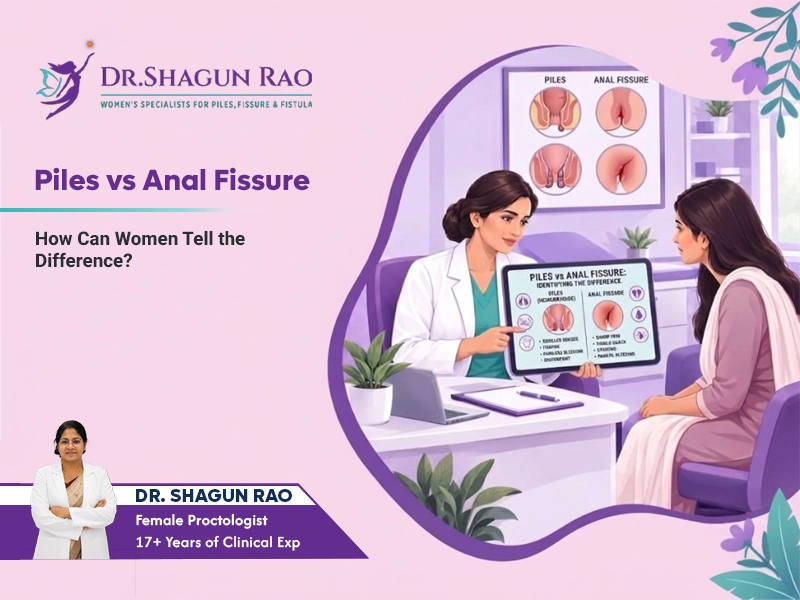
Two common conditions that can cause anorectal symptoms are piles (hemorrhoids) and anal fissure. Because some symptoms overlap, women may find it difficult to know whether they have piles or a fissure.
Understanding the typical differences between the two can help you recognize what may be happening. However, symptoms alone cannot always establish a diagnosis. If symptoms are persistent, recurrent, or concerning, a clinical evaluation is important.
The simplest way to understand the difference is to look at what each condition involves.
Piles are swollen blood vessels in and around the anal canal.
An anal fissure is a small tear in the lining of the anal canal.
Both can cause bleeding and discomfort during bowel movements, but the pattern of symptoms can be different.
Piles can cause a range of symptoms depending on their location and severity.
Common symptoms include:
Some people with piles may have bleeding without significant pain.
Pain can be more prominent when a hemorrhoid becomes inflamed or thrombosed.
An anal fissure is a small tear in the anal lining.
The typical symptoms may include:
One of the features that often makes a fissure different from uncomplicated piles is the sharp or burning pain associated with passing stool.
However, individual symptoms can vary.
Symptom | Piles | Anal Fissure |
Bleeding | Common | Can occur |
Pain during bowel movement | May occur | Often prominent |
Sharp or cutting pain | Less typical | Common |
Burning pain after stool | Can occur | Common |
Itching | Common | Can occur |
Lump/swelling | Common | May occur |
Constipation association | Common | Common |
Discharge | Not typical | Not typical |
This table provides a general comparison, but it should not be used to diagnose yourself.
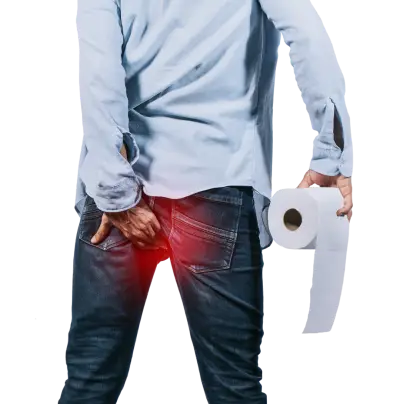
An anal fissure commonly causes significant pain during and after bowel movements.
The pain may be described as:
Some women may experience pain that continues for a period after passing stool.
Piles can also cause pain, but uncomplicated hemorrhoids do not always cause severe pain.
A painful lump may occur when a hemorrhoid becomes thrombosed or significantly inflamed.
Because pain patterns can overlap, persistent anal pain in women should be properly evaluated.
Both piles and anal fissures can cause rectal bleeding.
In many cases, the blood may appear bright red and may be noticed on toilet paper, on the surface of the stool, or in the toilet.
However, rectal bleeding should not automatically be assumed to be caused by piles or fissure.
Persistent or recurrent bleeding deserves appropriate medical evaluation because there can be other causes.
Yes.
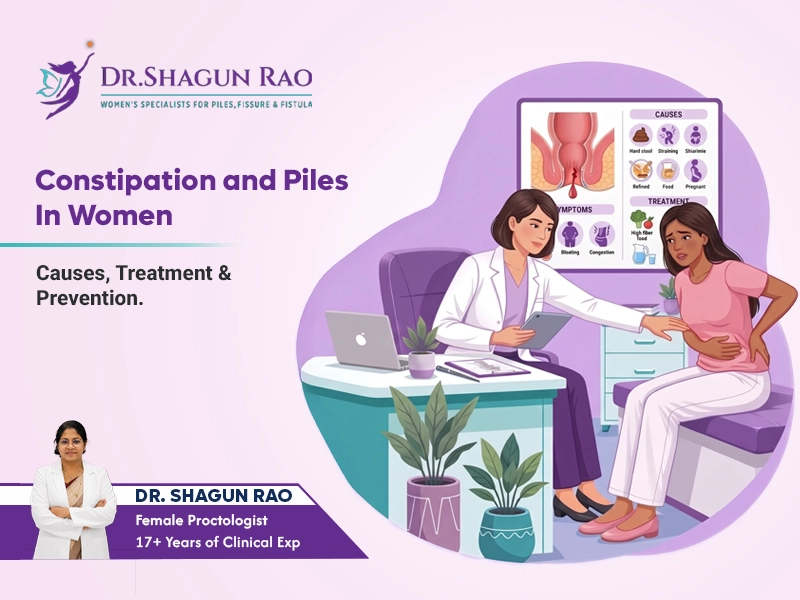
Constipation and hard stools can contribute to both conditions.
When stool is hard, passing it may require increased straining and can irritate or injure the anal tissues.
This can contribute to:
Constipation → Hard stool → Straining → Anal irritation
In some cases, a hard bowel movement may contribute to an anal fissure.
Repeated straining may also aggravate hemorrhoidal symptoms.
This is why constipation management can be an important part of treating and preventing anorectal symptoms.
The anal canal contains sensitive tissues.
When a fissure is irritated as stool passes through the anal canal, pain can occur. In some patients, discomfort may continue after the bowel movement.
This can sometimes create a cycle in which the person becomes afraid of passing stool, delays bowel movements, develops harder stool, and experiences more pain.
Addressing constipation and receiving appropriate treatment can help break this cycle.
Yes.
A person can have more than one anorectal condition at the same time.
For example, someone with constipation may develop an anal fissure while also having hemorrhoids.
This is another reason why identifying the condition based on one symptom alone can be difficult.
A proper clinical assessment can help determine which condition or conditions are responsible for the symptoms.
Certain symptoms may provide clues, but they cannot reliably confirm the diagnosis.
Symptoms that may suggest piles
Bleeding during bowel movements
Itching
Swelling
A lump around the anus
Discomfort
Pain associated with a swollen or thrombosed hemorrhoid
Symptoms that may suggest an anal fissure
Sharp pain while passing stool
Burning pain afterward
Pain that persists after bowel movements
A small amount of bright red bleeding
Symptoms following constipation or hard stool
If you are unsure whether you have piles or fissure symptoms, it is better to have the condition evaluated rather than repeatedly treating yourself for the wrong problem.
Yes, some cases can improve with conservative treatment.
Depending on the condition and severity, management may include:
The appropriate approach depends on the diagnosis and individual clinical findings.
Having piles or a fissure does not automatically mean surgery is required.
Consider consulting a specialist if you experience:
It is particularly important not to ignore persistent or recurrent rectal bleeding.
Although piles and fissures are common causes, bleeding can have other causes and should be appropriately evaluated.
If you are nervous about seeing a proctologist, remember that the first step is usually a discussion about your symptoms.
The doctor may ask:
Depending on your symptoms, a clinical examination may be recommended.
The purpose is to understand the cause of the symptoms and determine an appropriate treatment plan.
A consultation does not mean that you have committed to surgery.
For some women, discussing symptoms involving the anus and rectum can feel particularly uncomfortable.
A female proctologist can provide an environment in which women may feel more comfortable discussing:
Dr. Shagun Rao provides specialized proctology care for women and men in Pune and PCMC.
Her approach focuses on listening to the patient’s concerns, evaluating the condition, explaining the diagnosis and treatment options, and selecting an appropriate treatment plan.
Listen → Evaluate → Diagnose → Explain → Treat
Although piles and anal fissures can share symptoms, their management may be different.
For example, a patient with a fissure may need a treatment plan focused on reducing constipation and allowing the fissure to heal.
A patient with symptomatic piles may require a different approach depending on the severity and type of hemorrhoid.
Treating the wrong condition may delay appropriate care.
That is why online symptom searches can help you understand your symptoms, but they should not replace professional medical evaluation when symptoms persist.
Anal pain deserves medical attention when it is:
A painful swelling with increasing redness, significant tenderness, pus, or fever should be evaluated promptly.
Healthy bowel habits can help reduce factors that contribute to both conditions.
Consider:
These measures may help support bowel health, but they cannot guarantee that piles or fissures will never develop.
If you are trying to determine whether your symptoms are piles or fissure symptoms, you do not have to figure it out on your own.
A specialist consultation can help identify the likely cause of pain, bleeding, swelling, or other anorectal symptoms and explain the available treatment options.
Dr. Shagun Rao is a female proctologist providing specialized care in Pune and PCMC, with more than 17 years of clinical experience.
Her areas of care include:
Treatment is planned according to the patient’s symptoms, diagnosis, clinical findings, and individual circumstances.
Piles and anal fissures can cause similar symptoms, but they are different conditions and may require different approaches to treatment.
If you have bleeding, anal pain, itching, swelling, or painful bowel movements, try not to assume that you know the cause.
Understanding the difference between piles vs fissure can be useful, but a proper clinical evaluation is the best way to determine what is causing your symptoms.
For women looking for a professional and confidential consultation, Dr. Shagun Rao provides specialized female proctology care in Pune and PCMC.
Get clear, compassionate guidance about your anorectal condition and available treatment options.

Piles commonly cause bleeding, itching, swelling, or a lump, while an anal fissure often causes sharp or burning pain during or after bowel movements. However, symptoms can overlap, so clinical evaluation may be needed.
An anal fissure commonly causes significant pain during and after bowel movements. Piles may cause discomfort or pain, particularly when inflamed or thrombosed.
Yes. It is possible for more than one anorectal condition to occur at the same time, particularly when constipation and straining are present.
No. Piles are a common cause of rectal bleeding, but anal fissures and other conditions can also cause bleeding. Persistent or recurrent bleeding should be evaluated.
Some anal fissures may improve with conservative treatment, particularly when constipation and contributing factors are addressed. Persistent cases may require further treatment.
Some cases can be managed conservatively, while others may require office-based, minimally invasive, or other procedures depending on severity and symptoms.
Pain during bowel movements can occur due to constipation, an anal fissure, piles, infection, or other anorectal conditions. The underlying cause should be determined if pain persists or returns.
Women may choose a female proctologist if they feel more comfortable discussing sensitive symptoms with a female doctor. Dr. Shagun Rao provides proctology consultations for women in Pune and PCMC.
Seek medical evaluation if symptoms are persistent, recurrent, severe, or associated with bleeding, swelling, discharge, fever, or difficulty passing stool.
If you are experiencing anal pain in women, recurrent bleeding, painful bowel movements, or symptoms that may be related to piles or an anal fissure, consider seeking professional evaluation.
Location: Pune / PCMC
Appointments: Online appointment available
Dr. Shagun Rao — Compassionate Care. Clinical Excellence. Trusted Experience.
From traditional Ksharsutra therapy to modern laser procedures, Dr. Shagun Rao provides a range of treatment options for anorectal conditions — with the focus always on choosing what is appropriate for you.
Schedule a consultation with Dr. Shagun Rao for professional evaluation and personalized treatment guidance.
2026 dr. Shagun Rao, All rights reserved. Present by Codigix