
Written By
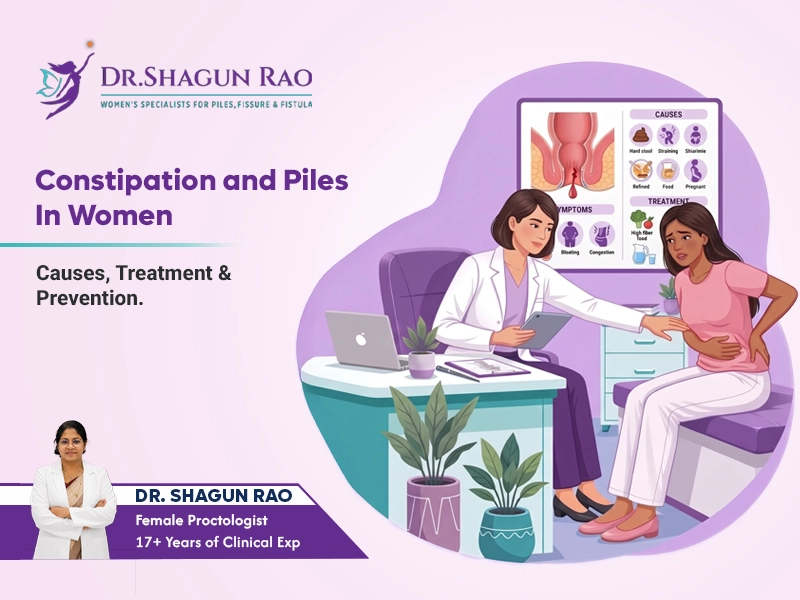
Constipation and piles are common problems that can affect women at different stages of life. Although constipation does not automatically mean that a woman will develop piles, repeated straining, hard stools, and difficulty passing bowel movements can contribute to or worsen anorectal symptoms.
For women experiencing constipation, discomfort, bleeding, itching, swelling, or a lump around the anus, understanding the connection between constipation and piles can help with prevention and appropriate treatment.
The good news is that not every case of piles requires a procedure. Addressing constipation, improving bowel habits, and making appropriate lifestyle changes may form an important part of management for many patients.
Constipation generally refers to bowel movements that are difficult to pass or occur less frequently than usual. It may involve hard or dry stools, excessive straining, or a feeling that the bowel has not completely emptied.
Common symptoms of constipation include:
Constipation can be temporary or persistent. If it continues or repeatedly returns, it is worth discussing with a healthcare professional.
Piles, also called hemorrhoids, are swollen blood vessels in and around the anal canal.
They may cause:
Not every person with piles has the same symptoms, and the severity can vary.
Some cases can be managed conservatively, while others may require an office-based procedure or another form of treatment.
Constipation and piles can be connected through several factors.
When stool is hard or difficult to pass, a person may need to strain more during bowel movements. Repeated straining can increase pressure in the veins around the anal canal.
Spending a prolonged time on the toilet may also contribute to increased pressure in the anorectal area.
This does not mean that constipation is the only cause of piles. However, improving bowel habits and preventing constipation can be an important part of managing symptoms and reducing factors that may aggravate piles.
A useful cycle to understand is:
Constipation → Hard stool → Straining → Increased anorectal pressure → Worsening symptoms
Breaking this cycle can be an important part of conservative management.
Women can experience constipation and piles for many different reasons.
Some factors may include:
Not every woman with these factors will develop piles.
Individual symptoms and medical history are important when determining the cause.
Pregnancy can bring significant changes to digestion and bowel habits.
Some women experience constipation during pregnancy due to hormonal changes, dietary changes, reduced activity, pressure from the growing uterus, or other factors.
Constipation can make bowel movements more difficult and may aggravate existing hemorrhoidal symptoms.
Women who develop rectal bleeding, significant anal pain, swelling, or other anorectal symptoms during pregnancy should discuss them with an appropriate healthcare professional rather than assuming that all symptoms are simply due to piles.
Yes, constipation can aggravate piles in some people.
Hard stools may require increased straining, while repeated difficult bowel movements can irritate the anal area.
If piles are already present, constipation may contribute to symptoms such as:
Managing constipation can therefore be an important part of a broader piles treatment plan.
Prevention starts with healthy bowel habits.
1. Eat Enough Dietary Fiber
Fiber can help increase stool bulk and support regular bowel movements.
Good sources include:
Vegetables
Fruits
Whole grains
Legumes
Other fiber-rich foods
Increase fiber gradually if your current intake is low, and pay attention to adequate fluid intake.
2. Drink Adequate Fluids
Adequate hydration can support softer stools and regular bowel function.
Individual fluid requirements vary depending on factors such as activity, climate, age, and health conditions.
3. Stay Physically Active
Regular physical activity can support healthy bowel function.
Even simple activities such as walking can be useful for maintaining an active lifestyle.
4. Do Not Ignore the Urge to Pass Stool
Repeatedly delaying bowel movements may contribute to constipation in some people.
When possible, respond to the body’s natural urge to pass stool.
5. Avoid Excessive Straining
Try not to force bowel movements.
Repeated straining can contribute to increased pressure around the anal area and may aggravate anorectal symptoms.
6. Avoid Spending Too Long on the Toilet
The toilet should not become a place for prolonged sitting, reading, or using a phone.
Spending excessive time on the toilet may increase pressure around the anorectal area.
Treatment depends on the cause and severity of constipation.
Depending on the individual situation, management may include:
Persistent constipation should be evaluated rather than repeatedly relying on self-treatment.
If constipation is associated with rectal bleeding, significant pain, unexplained weight loss, persistent abdominal symptoms, or a major change in bowel habits, medical assessment is particularly important.
If you are looking for constipation treatment in Pune, it is important to understand that treatment should be based on the underlying cause.
Constipation may occur because of lifestyle factors, dietary patterns, medications, changes in bowel habits, or other medical conditions.
Dr. Shagun Rao evaluates patients with anorectal symptoms and can help determine whether constipation is contributing to problems such as piles, fissure, or other anorectal conditions.
The goal is not simply to treat the symptom temporarily but to understand the patient’s symptoms and develop an appropriate management plan.
Treatment for piles depends on the severity, symptoms, and clinical findings.
Not every patient requires surgery.
Management may include:
The appropriate treatment should be selected after evaluation rather than based solely on the presence of bleeding or a lump.
Some cases of piles can improve with conservative management, particularly when symptoms are mild and contributing factors such as constipation and straining are addressed.
However, persistent or recurrent symptoms may require further evaluation.
If symptoms continue despite dietary and lifestyle measures, a specialist can determine whether additional treatment is appropriate.
The important point is that having piles does not automatically mean you need surgery.
For women who have experienced piles before, preventing constipation and avoiding excessive straining may help reduce factors that can aggravate symptoms.
Important habits include:
These measures may support healthy bowel habits, but they cannot guarantee that piles will never develop.
Rectal bleeding should not automatically be assumed to be caused by piles.
Hemorrhoids and anal fissures are common causes of rectal bleeding, but other conditions can also cause bleeding.
The appearance, frequency, amount of bleeding, associated symptoms, medical history, and clinical findings all matter.
If rectal bleeding is persistent or recurrent, appropriate medical evaluation is recommended.
Consider consulting a proctologist if you have:
A consultation can help determine whether the symptoms are related to piles, fissure, constipation, fistula, pilonidal disease, or another condition.
Many women hesitate to seek care because they feel embarrassed discussing bowel movements or anorectal symptoms.
A consultation generally begins with a discussion of your symptoms and medical history.
The doctor may ask about:
Depending on your symptoms, a clinical examination may be recommended.
The purpose is to identify the cause of the symptoms and determine whether conservative management or another treatment approach may be appropriate.
Some women may feel more comfortable discussing constipation, rectal bleeding, piles, anal pain, or other sensitive concerns with a female doctor.
Dr. Shagun Rao provides specialized proctology care for women and men in Pune and PCMC.
With more than 17 years of clinical experience, her approach focuses on careful evaluation and personalized treatment planning.
The treatment philosophy is:
Listen → Evaluate → Diagnose → Explain → Treat
The objective is to understand the patient’s condition before recommending an appropriate treatment.
Consider consulting a proctologist if you have:
A consultation can help determine whether the symptoms are related to piles, fissure, constipation, fistula, pilonidal disease, or another condition.
Constipation and piles can sometimes become part of a recurring cycle of hard stools, straining, irritation, and worsening symptoms.
Taking steps to improve bowel habits can be an important part of prevention and conservative management. However, recurrent bleeding, pain, swelling, or persistent symptoms deserve appropriate medical evaluation.
Dr. Shagun Rao provides specialized proctology care in Pune and PCMC, including evaluation and management of piles, anal fissure, anal fistula, pilonidal sinus, and other anorectal conditions.
If you are experiencing constipation along with piles or other anorectal symptoms, a consultation can help you understand the underlying problem and available treatment options.
Get clear, compassionate guidance about your anorectal condition and available treatment options.

Common causes include constipation, hard stools, anal fissure, piles, infection, and other anorectal conditions. The exact cause depends on the symptoms and clinical findings.
Maintaining healthy bowel habits can help reduce factors that may aggravate piles. This includes adequate fiber and fluids, regular physical activity, avoiding excessive straining, avoiding prolonged toilet sitting, and addressing constipation early.
The appropriate treatment depends on the cause and severity. Dietary and lifestyle changes may help some people, while persistent constipation may require medical evaluation and appropriate treatment.
Some cases of piles can improve with conservative management, particularly when constipation and other contributing factors are addressed. Other cases may require procedures depending on symptoms and severity.
Constipation can lead to hard stools and repeated straining. These factors can increase pressure in the anorectal area and may aggravate hemorrhoidal symptoms.
No. Piles are a common cause of rectal bleeding, but anal fissures and other conditions can also cause bleeding. Persistent or recurrent bleeding should be appropriately evaluated.
Pregnancy can contribute to changes in bowel habits and constipation, and these factors may aggravate hemorrhoidal symptoms in some women. Persistent or significant symptoms should be discussed with a healthcare professional.
Consider medical evaluation when constipation is persistent, recurrent, difficult to manage, or associated with rectal bleeding, significant pain, unexplained weight loss, persistent abdominal symptoms, or a major change in bowel habits.
Location: Pune / PCMC
Appointments: Online appointment available
Dr. Shagun Rao — Compassionate Care. Clinical Excellence. Trusted Experience.
From traditional Ksharsutra therapy to modern laser procedures, Dr. Shagun Rao provides a range of treatment options for anorectal conditions — with the focus always on choosing what is appropriate for you.
Schedule a consultation with Dr. Shagun Rao for professional evaluation and personalized treatment guidance.
2026 dr. Shagun Rao, All rights reserved. Present by Codigix