
Written By
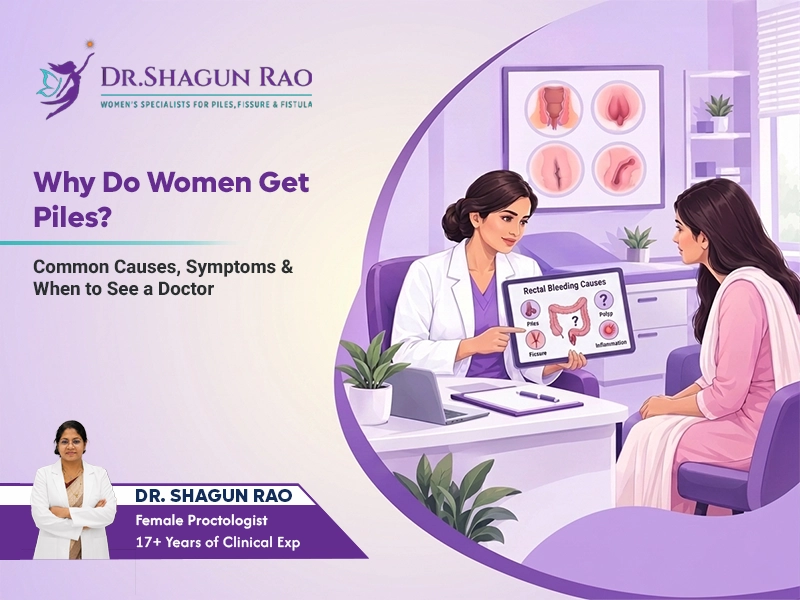
Piles, also known as hemorrhoids, are swollen blood vessels and tissues around the anus and lower rectum. They can affect anyone, but certain factors may make women more likely to experience them at different stages of life. Pregnancy, childbirth, constipation, prolonged sitting, changes in bowel habits, and straining during bowel movements are some common factors associated with piles.
Women may sometimes hesitate to discuss symptoms such as rectal bleeding, anal pain, itching, swelling, or a lump around the anus. However, these symptoms should not simply be ignored or automatically assumed to be piles. A medical evaluation can help identify the cause and determine the appropriate treatment.
Understanding the causes and symptoms of piles in women can help women recognize when it may be appropriate to consult a doctor.
Piles, or hemorrhoids, are swollen and enlarged blood vessels and supporting tissues in the anal and lower rectal region. They can occur inside the rectum, known as internal hemorrhoids, or under the skin around the anus, known as external hemorrhoids.
Symptoms can vary depending on the type and severity of hemorrhoids. Some people may have mild symptoms that improve with dietary and lifestyle changes, while others may experience recurrent bleeding, pain, swelling, or discomfort that requires medical assessment.
Not every case of piles requires a procedure. Treatment depends on the symptoms, severity, clinical findings, and individual circumstances.
There is no single cause of piles in women. Several factors can contribute to increased pressure on the veins and tissues around the anus.
Pregnancy
Pregnancy is one of the factors that can contribute to hemorrhoids. As the uterus grows, it can place additional pressure on the veins in the pelvic and rectal area. Hormonal changes during pregnancy can also affect bowel movements and contribute to constipation.
Women who develop hemorrhoids during pregnancy may experience itching, swelling, discomfort, or bleeding during bowel movements.
Constipation and Straining
Chronic constipation is a common factor associated with piles. Hard stools can make bowel movements difficult and may cause repeated straining.
Spending excessive time on the toilet or repeatedly straining to pass stool can increase pressure around the anal blood vessels.
Managing constipation through adequate fluid intake, dietary fiber, appropriate physical activity, and medical guidance when required can be an important part of hemorrhoid management.
Childbirth
Pregnancy and childbirth can place additional pressure on the pelvic and anorectal region. Straining during vaginal delivery may contribute to the development or worsening of hemorrhoids in some women.
Some women may notice piles symptoms during pregnancy or shortly after childbirth. Persistent or severe symptoms should be discussed with a qualified doctor rather than managed only through self-treatment.
Changes in Bowel Habits
Repeated episodes of constipation or diarrhea may contribute to irritation and increased pressure around the anal region.
Maintaining regular bowel habits and addressing persistent digestive problems can help reduce factors that may contribute to hemorrhoidal symptoms.
Prolonged Sitting
Sitting for long periods, particularly when combined with low physical activity and constipation, may contribute to problems with bowel habits and anorectal discomfort.
Women with desk-based jobs or lifestyles involving prolonged sitting may benefit from regular movement, adequate hydration, a fiber-rich diet, and healthy toilet habits.
Low-Fiber Diet
Insufficient dietary fiber can contribute to hard stools and constipation. A diet containing adequate fiber from vegetables, fruits, whole grains, and other suitable sources can help promote softer and more regular bowel movements.
If constipation is persistent, dietary changes alone may not always be sufficient, and medical evaluation may be appropriate.
The symptoms of hemorrhoids can vary from person to person. Common piles symptoms in women may include:
Rectal bleeding should not automatically be attributed to piles. Although hemorrhoids are a common cause of rectal bleeding, other conditions can also cause similar symptoms. A proper clinical evaluation is important when bleeding is persistent, recurrent, unexplained, or associated with other concerning symptoms.
Hemorrhoids can occur during pregnancy, particularly as pregnancy progresses. Increased pressure in the pelvic region, hormonal changes, constipation, and straining may contribute to their development.
Pregnant women should discuss persistent or troublesome symptoms with their obstetrician or an appropriate specialist. Treatment during pregnancy should be selected carefully according to the patient’s individual circumstances.
After delivery, some hemorrhoidal symptoms may improve as pregnancy-related pressure decreases. However, persistent or recurrent symptoms may require further evaluation.
Women should consider consulting a female piles doctor when symptoms are persistent, recurrent, severe, or interfering with daily activities.
Medical evaluation may be appropriate if you experience:
A consultation does not automatically mean surgery. Depending on the diagnosis and severity, treatment may include dietary and lifestyle changes, constipation management, medications, conservative care, office-based procedures, or a suitable minimally invasive treatment.
No. Rectal bleeding can have several possible causes.
Piles and anal fissures are common causes, but bleeding may also occur with other gastrointestinal or anorectal conditions. For this reason, recurrent or unexplained bleeding should be clinically evaluated rather than repeatedly self-treated as piles.
The appearance, amount, frequency, and circumstances of bleeding can provide useful information, but a doctor may need to perform an appropriate examination to determine the cause.
Diagnosis generally begins with a discussion about symptoms, bowel habits, medical history, pregnancy or childbirth history when relevant, and any previous episodes of piles.
Depending on the symptoms, a doctor may perform a physical examination of the anal and surrounding area. Additional examination or investigations may be recommended when clinically indicated.
The purpose of evaluation is not only to confirm hemorrhoids but also to rule out other conditions that can produce similar symptoms.
Treatment depends on the type and severity of hemorrhoids.
For mild cases, conservative management may include:
When symptoms persist or hemorrhoids are more advanced, a doctor may discuss an appropriate procedure or minimally invasive treatment.
The treatment approach should be individualized rather than based solely on the presence of a particular symptom.
Not every case of hemorrhoids can be prevented, but several healthy habits may help reduce factors associated with their development or recurrence.
Women can consider:
During pregnancy, women should follow their obstetrician’s advice regarding diet, activity, constipation management, and treatment of hemorrhoidal symptoms.
Piles involve a sensitive area of the body, and some women may feel more comfortable discussing symptoms with a female doctor.
A female piles doctor can provide an environment where patients can openly discuss bleeding, pain, itching, swelling, bowel habits, pregnancy-related symptoms, or concerns following childbirth.
A consultation should focus on understanding the symptoms, identifying the likely cause, and explaining appropriate treatment options. Patients should feel comfortable asking questions about their diagnosis, treatment choices, recovery, and expected outcomes.
Women should not repeatedly ignore rectal bleeding, persistent pain, or recurrent anorectal symptoms.
Seek timely medical evaluation if symptoms are persistent, worsening, recurrent, or significantly affecting daily life. Urgent medical attention may be appropriate for heavy or ongoing bleeding, severe pain, dizziness or fainting, or other concerning symptoms.
Early evaluation can provide clarity about the cause of symptoms and help determine whether conservative management or further treatment is appropriate.
Dr. Shagun Rao provides specialized proctology care for women experiencing piles and other anorectal conditions. Her approach focuses on clinical evaluation and individualized treatment planning.
Depending on the diagnosis and severity, treatment may involve conservative management, dietary and lifestyle guidance, constipation management, medications, office-based procedures, minimally invasive treatments, advanced laser proctology, or other appropriate treatment options.
With more than 17 years of clinical experience, Dr. Shagun Rao focuses on helping patients understand their condition and make informed decisions about their treatment.
Women experiencing recurrent piles, rectal bleeding, anal pain, itching, swelling, or other anorectal symptoms can seek professional evaluation rather than relying on repeated self-treatment.
Piles are common, but persistent symptoms should not simply be accepted as something women have to live with. Understanding the possible causes and recognizing piles symptoms in women can help women seek appropriate medical advice at the right time.
If you are experiencing recurrent bleeding, anal pain, itching, swelling, a lump, or discomfort during bowel movements, consider consulting a qualified female piles doctor for an appropriate evaluation.
Get clear, compassionate guidance about your anorectal condition and available treatment options.

Piles in women can be associated with several factors, including pregnancy, childbirth, constipation, straining during bowel movements, prolonged sitting, changes in bowel habits, and insufficient dietary fiber.
Common symptoms include rectal bleeding, anal itching, pain or discomfort, swelling, a lump around the anus, and discomfort during bowel movements. Symptoms can vary depending on the type and severity of hemorrhoids.
Hemorrhoids can occur during pregnancy because of increased pressure in the pelvic region, hormonal changes, constipation, and straining. Persistent or troublesome symptoms should be discussed with a healthcare professional.
Consider consulting a female piles doctor when symptoms are persistent, recurrent, severe, or affecting daily activities. Recurrent or unexplained rectal bleeding should also be evaluated rather than automatically assumed to be piles.
No. Many cases can be managed with dietary and lifestyle measures, constipation management, medications, or conservative treatment. A procedure may be considered when clinically appropriate based on the diagnosis and severity.
Mild hemorrhoidal symptoms may improve with appropriate bowel-habit and lifestyle measures. However, persistent or recurrent symptoms should be evaluated to confirm the diagnosis and determine whether additional treatment is required.
Yes. Piles are one possible cause of rectal bleeding, but other anorectal and gastrointestinal conditions can also cause bleeding. Persistent, recurrent, or unexplained bleeding should be medically evaluated.
Experiencing piles, rectal bleeding, anal pain, itching, swelling, or recurrent bowel-related discomfort?
Consult Dr. Shagun Rao for personalized proctology care.
📍 Clinic: Pimple Saudagar, Pune
From traditional Ksharsutra therapy to modern laser procedures, Dr. Shagun Rao provides a range of treatment options for anorectal conditions — with the focus always on choosing what is appropriate for you.
Schedule a consultation with Dr. Shagun Rao for professional evaluation and personalized treatment guidance.
2026 dr. Shagun Rao, All rights reserved. Present by Codigix