
Written By
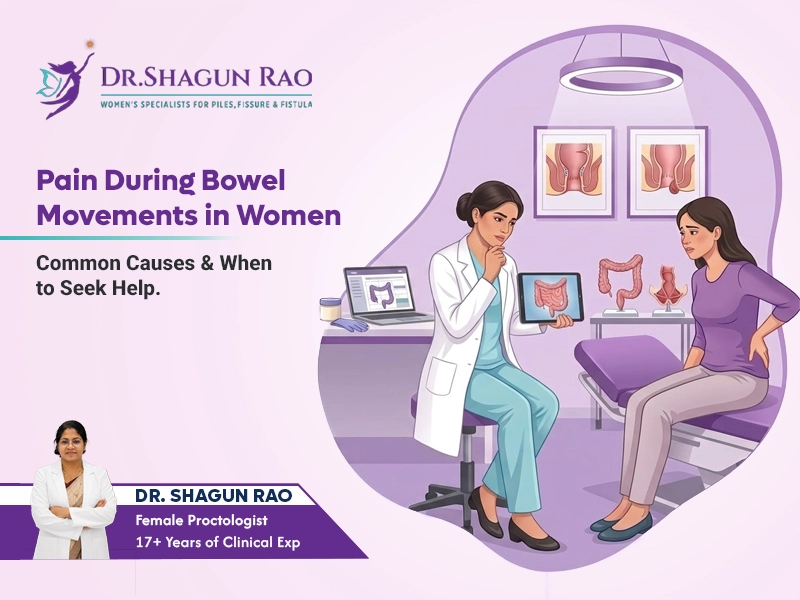
Pain during bowel movements can be uncomfortable, worrying, and difficult to discuss. For women, pain while passing stool may result from something as common as constipation or hard stools, but it can also be associated with anal fissures, piles, infections, fistulas, or other anorectal conditions.
Because several conditions can cause similar symptoms, it is important not to assume that every episode of anal or rectal pain is caused by piles.
If you are experiencing pain during bowel movements in women, understanding the possible causes and knowing when to consult a specialist can help you take the right next step.
Pain associated with bowel movements can feel different depending on its underlying cause.
Women may experience:
The timing, severity, and nature of the pain can provide useful clues, but a clinical evaluation may be needed to determine the actual cause.
1. Anal Fissure
An anal fissure is a small tear in the lining of the anal canal. It commonly causes sharp or burning pain while passing stool, and the discomfort may continue after the bowel movement.
Some women may also notice a small amount of bright-red bleeding.
Anal fissures can develop after passing hard or large stools, particularly when constipation or straining is present. Treatment depends on how long the fissure has been present, the severity of symptoms, and the clinical findings.
2. Piles or Hemorrhoids
Piles, also known as hemorrhoids, are swollen blood vessels in and around the anal canal.
They may cause:
However, not every case of piles causes pain. Therefore, persistent pain during bowel movements should not automatically be attributed to hemorrhoids.
3. Constipation and Hard Stools
Constipation is a common cause of painful bowel movements.
Hard or dry stools can make passing stool difficult and may result in:
Repeated constipation can also contribute to or worsen anal fissures and piles.
Adequate fluid intake, dietary fiber, physical activity, and healthy bowel habits may help some people. Persistent or recurrent symptoms, however, should be medically evaluated.
4. Anal or Perianal Infection
Pain around the anus can sometimes result from an infection or abscess.
An anal abscess may cause:
Rapidly worsening pain or swelling should be medically assessed rather than repeatedly treated as a minor skin irritation.
5. Anal Fistula
An anal fistula is an abnormal passage that can develop between the anal canal and the surrounding skin.
It may cause:
Pain accompanied by recurrent swelling or discharge should be evaluated by a qualified specialist.
6. Pilonidal Sinus
A pilonidal sinus generally affects the skin and underlying tissue near the cleft of the buttocks rather than the anal canal itself.
It may cause pain, swelling, tenderness, or discharge near the buttock cleft.
If the pain is located higher in the buttock cleft rather than directly around the anus, pilonidal sinus may be one of the conditions that needs to be considered.
7. Other Anorectal Conditions
Not every episode of anal or rectal pain is caused by piles, fissure, or constipation.
Other anorectal conditions can also cause pain, irritation, swelling, bleeding, or discomfort. This is why persistent or recurrent anal pain in women should not be self-diagnosed solely from symptoms found online.
An anal fissure is a tear in a sensitive area of the anal canal. When stool passes through the area, the tear can become irritated, causing sharp or burning pain.
Some people experience pain that continues even after the bowel movement has finished.
A cycle can sometimes develop:
Pain → fear of passing stool → holding stool → harder stool → more pain
Managing constipation and obtaining appropriate treatment can help break this cycle.
Seeing blood while passing stool can understandably cause concern.
Rectal bleeding may occur with piles or an anal fissure, but it should not automatically be attributed to hemorrhoids. The appearance and amount of blood, associated symptoms, medical history, and clinical findings all matter when determining the possible cause.
If rectal bleeding is persistent or recurrent, appropriate medical evaluation is important.
Pregnancy and childbirth can affect bowel habits and tissues around the pelvic and anal region.
Constipation, changes in bowel movements, straining, and other factors may contribute to anorectal symptoms during or after pregnancy.
Women experiencing persistent pain, bleeding, swelling, or other anorectal symptoms after childbirth should discuss them with an appropriate healthcare professional rather than assuming that the symptoms will resolve on their own.
Stress can affect bowel habits and may contribute to changes such as constipation or diarrhea.
However, persistent anal or rectal pain should not simply be attributed to stress without considering other possible causes.
If pain continues, returns frequently, or occurs with bleeding, swelling, discharge, or difficulty passing stool, medical evaluation can help identify the underlying problem.
Consider consulting a proctologist if you experience:
Women who are specifically searching for a Female proctologist for rectal pain Pimple Saudagar may prefer to discuss sensitive anorectal symptoms with a female specialist in a professional clinical setting.
A consultation does not necessarily mean that surgery will be required. The purpose of the consultation is to understand the symptoms, evaluate the condition, identify the likely cause, and discuss appropriate treatment options.
Many women delay consultation because they are concerned about embarrassment or an uncomfortable examination.
A proctology consultation generally begins with a discussion about your symptoms and medical history.
The doctor may ask:
Depending on your symptoms, a clinical examination may be recommended.
The purpose of the evaluation is to identify the cause of the pain rather than simply treat the symptom.
No. Pain during bowel movements does not automatically mean that a procedure or surgery is required.
Depending on the diagnosis, treatment may involve:
The appropriate treatment depends on the underlying cause, severity, symptoms, clinical findings, and individual circumstances.
Some general measures can support healthier bowel habits.
Keep Stool Soft
Adequate fluid intake and a fiber-rich diet can help support regular and comfortable bowel movements.
Avoid Excessive Straining
Repeated straining can contribute to anorectal problems and may worsen existing symptoms.
Do Not Ignore the Urge to Pass Stool
Regularly delaying bowel movements can contribute to constipation in some people.
Stay Physically Active
Regular physical activity can support healthy bowel function.
Pay Attention to Persistent Symptoms
If pain, bleeding, swelling, or discharge keeps returning, do not rely only on home remedies. An evaluation can help determine the actual cause.
Pain deserves particular attention when it occurs with symptoms such as:
These symptoms may require timely medical assessment.
Anorectal symptoms can be highly personal, and some women may feel more comfortable discussing pain, bleeding, itching, swelling, bowel habits, or other sensitive concerns with a female doctor.
A female proctologist in Pimple Saudagar can provide an opportunity to discuss these concerns in a professional and confidential clinical environment.
Dr. Shagun Rao provides specialized proctology care for women and men in Pune and PCMC, with a focus on conditions including:
Her approach is based on:
Listen → Evaluate → Diagnose → Explain → Treat
The goal is to understand the patient’s symptoms before recommending an appropriate treatment approach.
If you are experiencing pain during bowel movements, recurrent anal discomfort, rectal pain, bleeding, swelling, or other anorectal symptoms, you do not have to keep guessing about the cause.
An evaluation can help determine whether the symptoms may be related to constipation, piles, an anal fissure, fistula, pilonidal disease, or another anorectal condition.
Dr. Shagun Rao is a female proctologist providing specialized proctology care in Pune and PCMC, with more than 17 years of clinical experience.
Women who prefer to discuss sensitive anorectal concerns with a female specialist can seek professional evaluation in a confidential clinical setting.
Pain during bowel movements is common, but persistent or recurrent pain should not simply be ignored.
Constipation, anal fissure, piles, infection, fistula, pilonidal disease, and other anorectal conditions can produce overlapping symptoms. Identifying the underlying cause is the first step toward appropriate management.
If you are experiencing pain during bowel movements in women, persistent anal pain, rectal pain, bleeding, swelling, or a painful bowel movement, consider consulting a qualified specialist rather than continuing to guess at the cause.
For women seeking a female proctologist in Pimple Saudagar or elsewhere in Pune and PCMC, Dr. Shagun Rao provides professional evaluation of anorectal concerns, with treatment planned according to the individual patient’s condition.
Get clear, compassionate guidance about your anorectal condition and available treatment options.

Common causes include constipation, hard stools, anal fissure, piles, infection, and other anorectal conditions. The exact cause depends on the symptoms and clinical findings.
Pain while passing stool can occur when the anal tissues are irritated or inflamed. An anal fissure, constipation, piles, or other conditions may cause painful bowel movements.
No. Piles are only one possible cause. Anal fissure, constipation, infection, fistula, and other conditions can also cause pain during bowel movements.
Pain that continues after a bowel movement can occur with conditions such as an anal fissure. Persistent or recurrent pain should be evaluated to determine the underlying cause.
Consider seeing a specialist if the pain is persistent, recurrent, severe, or associated with bleeding, swelling, discharge, a lump, constipation, or other concerning symptoms.
Yes. Hard stools and straining can cause irritation and pain and may contribute to conditions such as anal fissure or piles.
No. Treatment depends on the underlying condition. Some cases can be managed conservatively with dietary changes, constipation management, medications, or other non-surgical approaches.
Yes. Women who prefer to discuss sensitive anorectal concerns with a female doctor can consult Dr. Shagun Rao for evaluation and management of conditions such as piles, fissure, fistula, and other anorectal concerns.
For evaluation and personalized management of:
Location: Pune / PCMC
Appointments: Online appointment available
Dr. Shagun Rao — Compassionate Care. Clinical Excellence. Trusted Experience.
From traditional Ksharsutra therapy to modern laser procedures, Dr. Shagun Rao provides a range of treatment options for anorectal conditions — with the focus always on choosing what is appropriate for you.
Schedule a consultation with Dr. Shagun Rao for professional evaluation and personalized treatment guidance.
2026 dr. Shagun Rao, All rights reserved. Present by Codigix